Why International Medical Assistance Needs Its Own Training Path
International medical assistance is a specialised field, but there is still no widely established academic pathway designed specifically to prepare people for it.
Assistance companies recruit nurses, doctors, case managers, customer service professionals and operations staff with strong backgrounds in their own areas. The difficulty begins when they enter an environment that combines healthcare, insurance, logistics, communication and decision-making across borders. Most new employees have never been formally trained for that combination.
The hiring challenge
Finding people with medical knowledge is possible. Finding people with insurance experience is possible. Finding people who understand customer service, travel or logistics is also possible. Finding professionals who already understand international medical assistance as a complete operational environment is much harder.
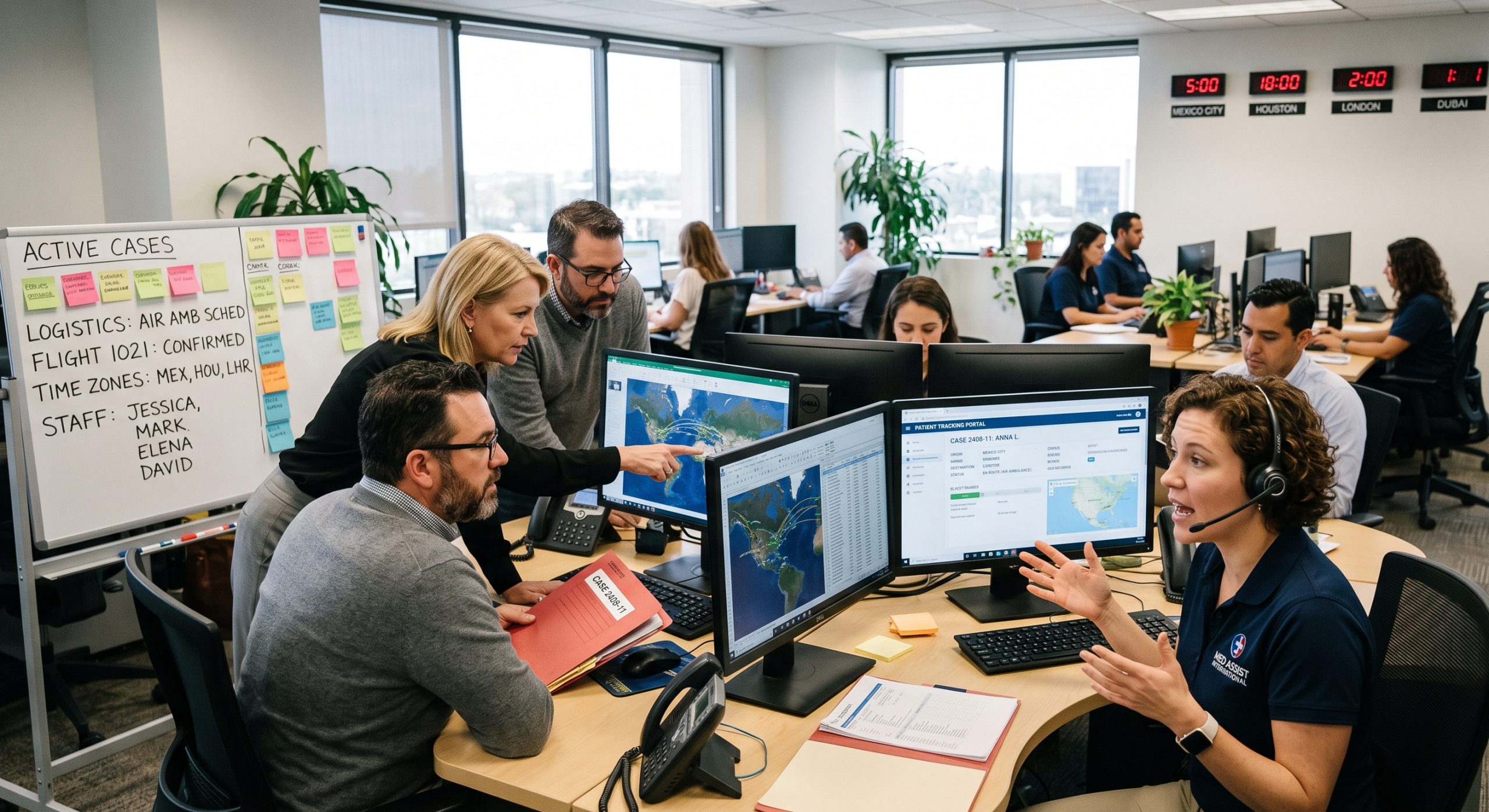
New employees may need to learn how an assistance case develops, how medical providers are coordinated, how patients are supported abroad, how information moves between different parties and how decisions are made in a 24/7 operation. These are central parts of the job, yet they are rarely taught together before someone enters the sector. This creates a common problem for assistance companies: recruitment is often followed by a long period of internal training before a new employee can work with confidence.
Training is difficult when operations cannot stop
Training people inside an assistance company is not simple. Experienced supervisors and senior employees are usually the people best placed to explain how the work is done. They are also the people managing cases, supporting teams and solving operational problems. That means training often has to compete with daily operations.
Knowledge can also become dependent on who is available to teach it. One team may explain a process differently from another. Important experience may remain with individual employees instead of becoming part of a structured learning system.
This was one of the challenges behind the development of the MCI Academy. MCI Group initially built its learning environment to train its own employees and create a more consistent way of transferring operational knowledge across teams.
International assistance is also a cultural challenge
Technical knowledge is only part of the work. An international assistance professional may speak with a patient who is frightened in a country they do not know, a hospital operating under a different healthcare system, an insurer working under another set of procedures and local providers with their own expectations about communication and payment.
The same case can therefore involve several professional and cultural perspectives at once. Understanding how to communicate with patients from different backgrounds, how to work with providers in different countries and how to coordinate with agents or partners across regions is not an optional skill. It directly affects how smoothly a case is managed.
For this reason, intercultural communication and human-centred patient support are included as specific areas within MCI Academy’s international medical assistance training.
The sector needs more than internal onboarding
For many years, international medical assistance has depended heavily on companies teaching employees through internal procedures, mentoring and experience. That knowledge is valuable, but it should not remain informal.
The industry needs clearer educational pathways that define what an international medical assistance professional should understand before or while entering the sector. Case management, medical coordination, patient communication, repatriation, provider relations and healthcare logistics can be taught in a structured way.
Formalising these studies would also help companies recruit more widely. A candidate would not need to arrive with years of assistance experience if there were recognised training paths that prepared them for the role. This is especially important because the sector brings together people from many professional backgrounds, including healthcare, insurance, communications and operations.
Turning operational knowledge into formal education
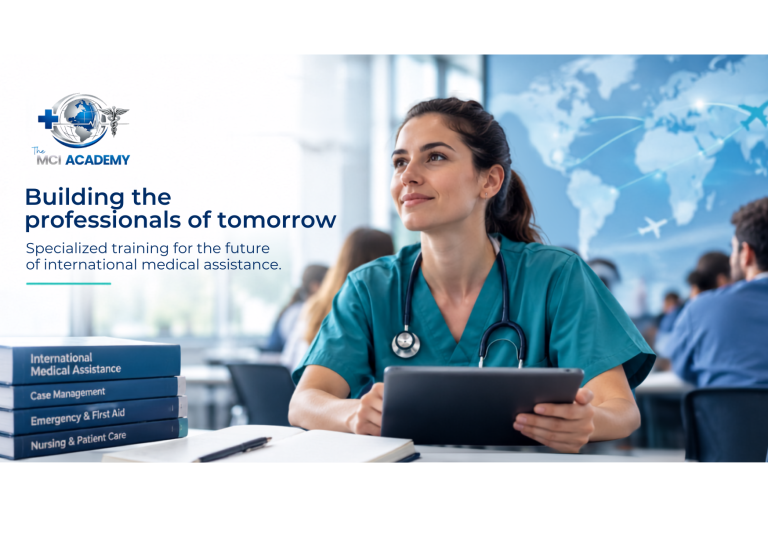
This is the direction MCI Academy is working toward. The Academy was created to transform MCI Group’s operational experience into structured professional education. Its programmes use online learning, practical cases and scenarios connected to the situations professionals face in international medical assistance.
Its English-language Microcredential in International Medical Assistance brings together four areas: foundations of the sector, operational case management, human-centred and intercultural communication and international medical coordination and global healthcare logistics. The complete pathway is certified by UTAMED.
This is one step toward something the industry still needs to develop further: a clearer professional education framework for international medical assistance.
Because better training does more than help a new employee understand a process. It gives teams a common language, helps organisations preserve their knowledge and prepares professionals to manage patients and cases with greater confidence from the beginning.