Climate, fire and responsibility: what the recent wildfires in Spain are asking us to understand
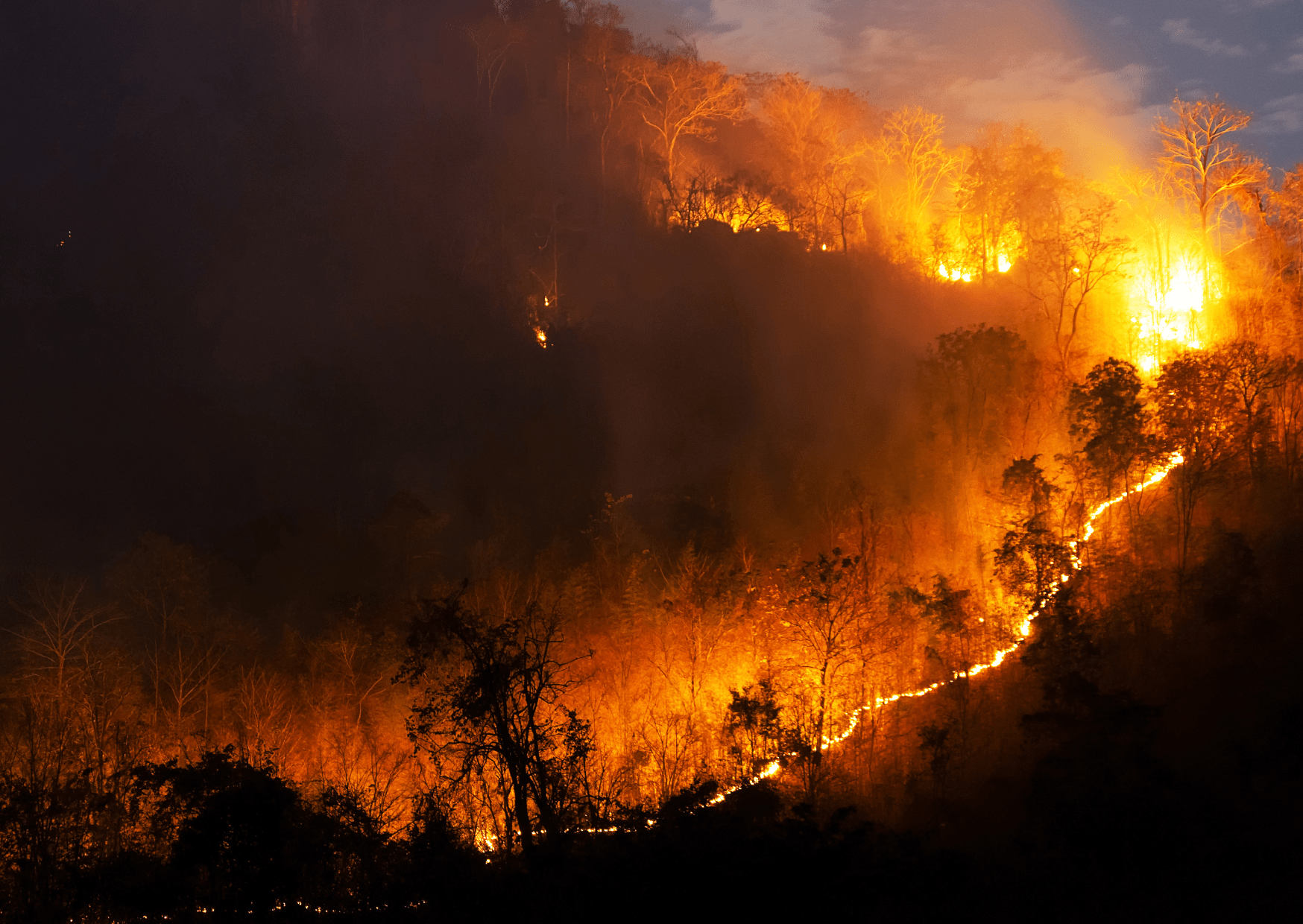
The images are difficult to forget: families leaving their homes, firefighters working for days under extreme heat, forests reduced to ash, animals displaced and entire communities waiting to know whether they can return.
The recent wildfires in Spain and France remind us that climate change is not a distant topic. It is already affecting the places where people live, work, travel and care for their families.
It is important to be precise. Climate change does not light every fire. Many fires begin through human activity, negligence or accidents. But climate change is making the conditions for large, fast and dangerous fires more frequent. Higher temperatures, long dry periods, low humidity and strong winds create landscapes that burn more easily and are harder to control. The Spanish Ministry for Ecological Transition has already warned that climate change will increase dangerous fire conditions and extend the fire season in Spain. Future planning, the report states, cannot rely only on the climate of the past. [1]
This year, the warning feels especially close. Spain experienced a very warm and dry May, with an intense warm episode in the second half of the month and rainfall below the normal average. [2] By late July, European wildfire monitoring showed that the EU had already recorded more fires than the long-term average, while very extreme fire danger conditions affected southwestern France and northern Spain. [3]
The human impact is immediate. In recent days, wildfires in Spain and France have forced large-scale evacuations, with hundreds of thousands of people displaced or affected by emergency measures. Behind every number there is a home, a family, a patient, a worker, a farm, a business or a community trying to stay safe. [4]
Spain and France are also two of the most visited countries in the world. Tourism brings economic value, cultural exchange and employment. It also creates responsibility. When millions of people visit natural parks, beaches, rural areas, historic towns and coastal regions, the question becomes unavoidable: do we really care enough about green, sustainable tourist facilities and services?
Sometimes we choose convenience without asking what it costs. Sometimes we enjoy a destination without thinking about water use, waste, transport, energy consumption or pressure on local ecosystems. Sustainable tourism cannot be a label used only in brochures. It has to be visible in how destinations are designed, how facilities operate and how visitors behave.
This is not only about tourism. It is about the way industries use land, water, energy and natural resources. It is about how close urban areas are built to forests and how prepared communities are to respond when fire reaches the places where people live. The European Environment Agency has warned that wildfires in Europe displace tens of thousands of people on average every year and that climate change is expanding fire-prone areas and extending fire seasons. [5]
Environmental protection is therefore not an abstract value. It is a form of prevention. It protects lives. It protects animals, forests, homes and local economies. It also protects the health systems and emergency services that are increasingly asked to respond to climate-related crises.
At MCI Group, care is part of our identity. We see care not only as medical assistance or operational coordination, but also as responsibility toward the people and environments around us. This is why we continue to take steps in our own environmental commitment, including the renewal this year of our CO2 emissions seal.
We also believe that preparation saves lives. Through MCI Academy, we are developing training in crisis management, first aid, medical assistance and emergency response because these situations are becoming more frequent and more complex. Communities, professionals and organisations need practical knowledge before the crisis happens, not only when the fire is already at the door.
Education does not replace public policy, environmental protection or emergency services. But it helps people understand risk, act calmly, support others and make better decisions when every minute matters.
The wildfires in Spain and France should make us think. They should move us from concern to responsibility. We need greener tourism, stronger prevention, better crisis preparation and a deeper respect for nature.
Protecting the environment is not separate from protecting ourselves. It is the same commitment.
References
[1] Spanish Ministry for Ecological Transition and the Demographic Challenge, “Los incendios forestales en España ante el cambio climático.”
[2] AEMET, May 2026 climate summary.
[3] European Commission Joint Research Centre and EFFIS, Current wildfire situation in Europe, July 2026.
[4] Associated Press and international reporting on wildfire evacuations in France and Spain, July 2026.
[5] European Environment Agency, Climate Preparedness 2025: Wildfires in Europe.